About the book
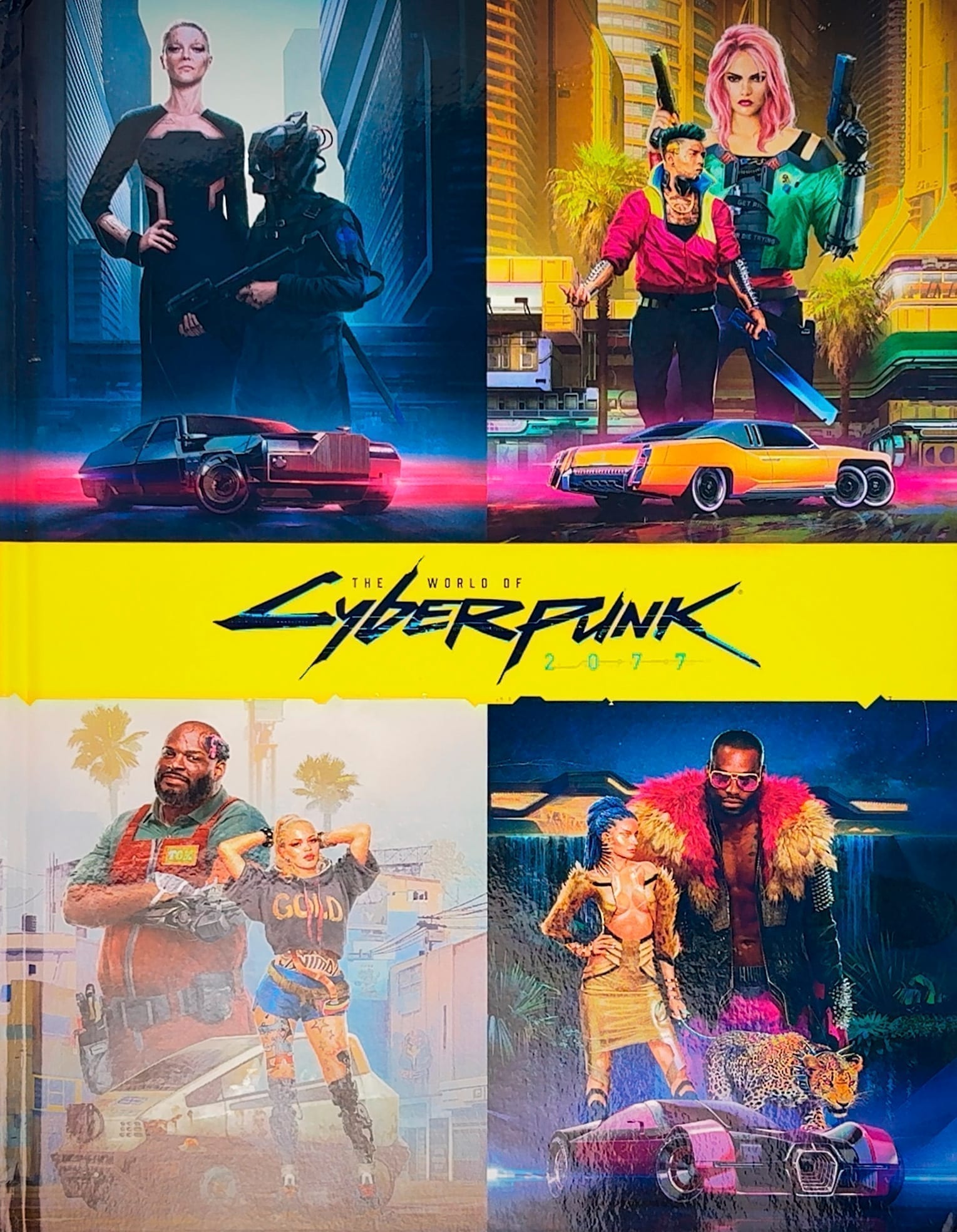
Let me get one thing out of the way first, because it's the most important thing to know before you buy it: this isn't really an artbook. There are no rough sketches, no turnarounds, no 3D model sheets. It's a lore book — a heavily illustrated, very well-produced guide to the history, technology and streets of Night City, and it reads more like a travel guide to a terrible place than a making-of.
Marcin Batylda wrote it with CD PROJEKT RED, and Dark Horse published it in the same format as their earlier The World of the Witcher. And honestly, once you accept what it is, it's one of the most enjoyable books of this kind I've read.
First impressions
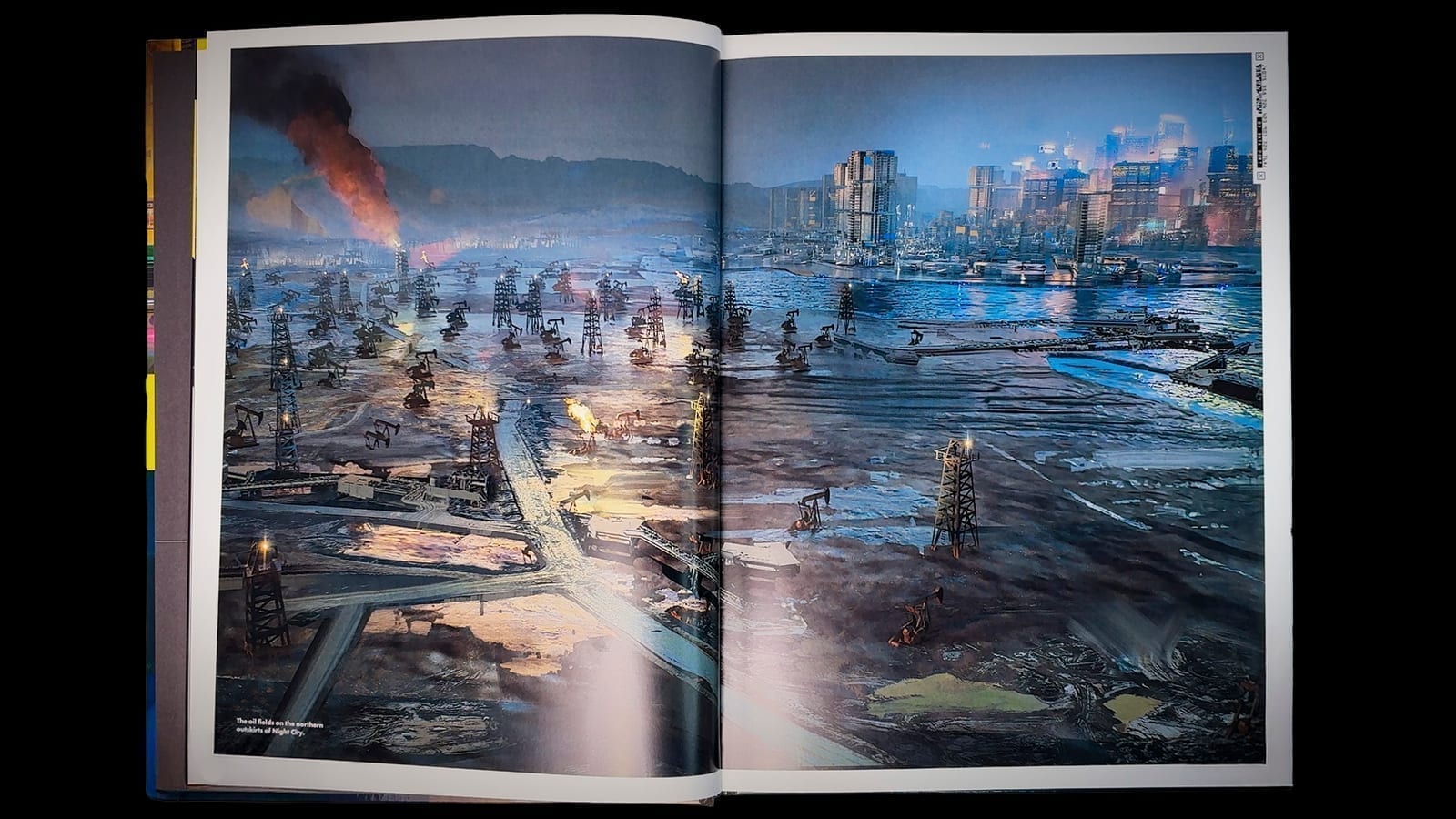
Big format, heavy paper, full colour on every page, and a design that commits completely to the bit. Neon, chrome, distressed type, glitchy layouts. It looks like it was printed inside the game.
And then there’s the timing, which makes this book more interesting now than when it came out. It was released in July 2020, months before the game. So what you’re holding is a lavish, confident description of a city that — when Cyberpunk 2077 actually launched on 10 December 2020 — the game itself couldn’t quite deliver. The launch was a mess: Sony pulled it from the PlayStation Store and offered refunds, and the studio publicly apologised.
Then, slowly, the game caught up with its own guidebook. The Edgerunners anime landed on Netflix in 2022, Update 2.0 rebuilt the core systems in 2023, Phantom Liberty followed, and the game has now sold more than 35 million copies. Reading this book today, it doesn’t feel like hype anymore. It feels like a promise that was eventually kept.
Content
The World of Cyberpunk 2077. 192 pages, hardcover, Dark Horse Books, written by Marcin Batylda with CD PROJEKT RED. Released July 28, 2020.
There’s also a Deluxe Edition with an exclusive cover designed after the Night City map, a hardbound slipcase, a Johnny Silverhand poster, vehicle concept art postcards and — my favourite completely unnecessary extra — a sheet of temporary tattoos.
Characters
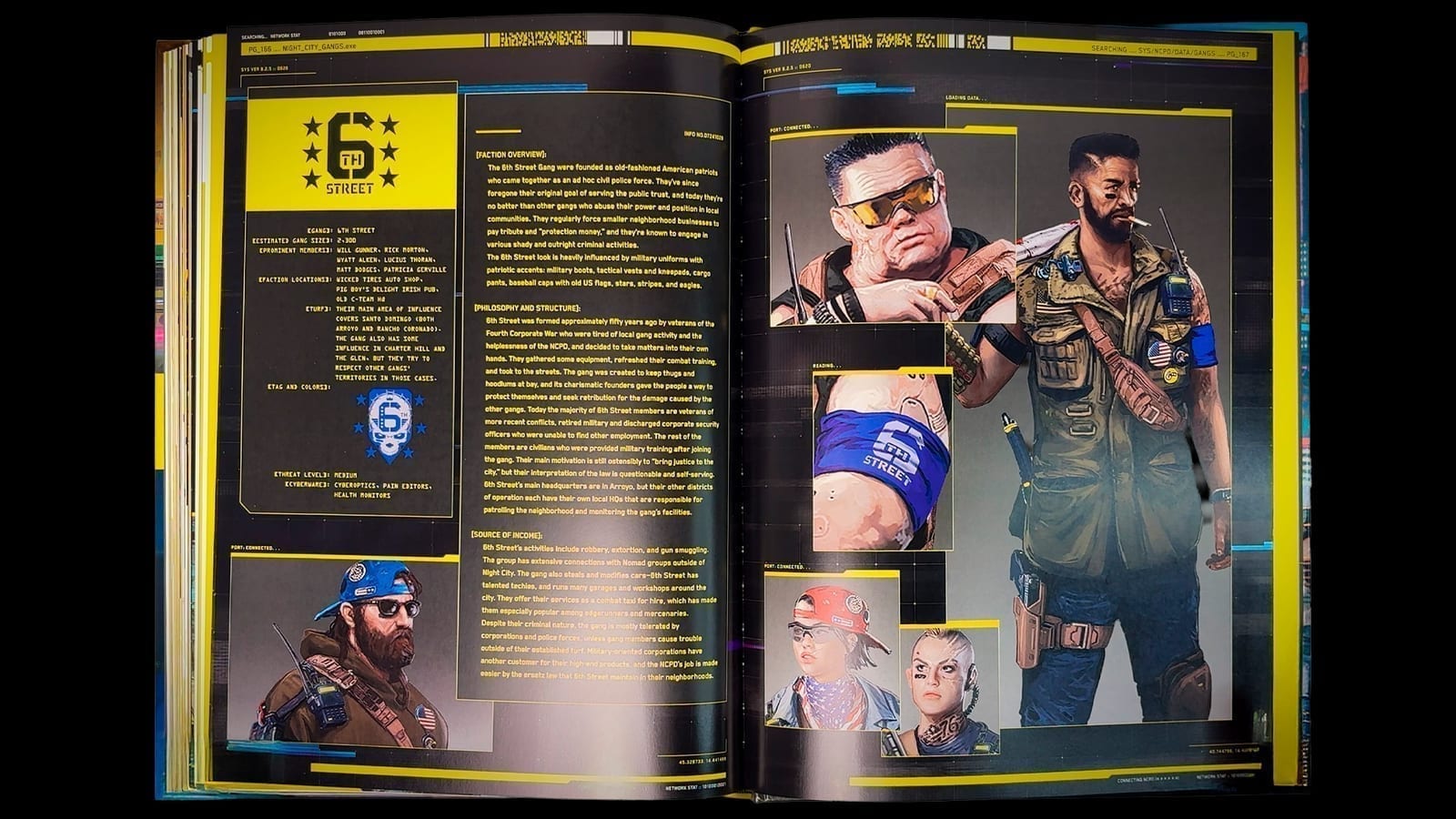
Because it’s a lore book, “characters” here means the people of Night City more than the cast of the game. The book profiles the city’s social classes, from corporate executives down to the people living under the overpasses, and it covers the gangs one by one: their turf, their motives, the way they look and the cyberware they favour. The Maelstrom concept art is a highlight.
It closes with an interview with Rogue, the veteran fixer from the game — a smart way to end, since it’s the closest the book gets to a personal voice from inside the world.
One honest note: it assumes you already know who people like Johnny Silverhand and Morgan Blackhand are. If you’re coming in cold, a few references will go right past you.

The journey through the story
Here’s the clever part. The whole book is framed as a series of articles from the Night City Inquirer, an in-universe news outlet with a pretty loose relationship with the truth. So you’re not reading an official encyclopedia — you’re reading journalists, interviews and opinion pieces, which means you’re allowed to doubt some of it. It’s a lovely trick, and it makes dense lore feel like reading a magazine.
The history chapter covers more than eighty years of an alternate timeline: climate collapse, resource wars, nation-states failing while megacorporations grow into countries of their own, a new Dust Bowl, and a run of corporate wars culminating in the Fourth Corporate War. You get the founding of Night City on Morro Bay, the consequences of Silverhand’s nuke, and how the United States fractured into pieces like the Free State of Northern California.
A lot of this comes from Mike Pondsmith’s original tabletop Cyberpunk games — Pondsmith licensed the world from 2077 onward to CD PROJEKT RED and consulted on the game — which is why the worldbuilding feels so much older and more lived-in than a typical tie-in. One reviewer described it as “an RPG supplement without the RPG stats,” and that’s exactly right. If you play Cyberpunk RED at the table, this book is genuinely useful.
The worlds
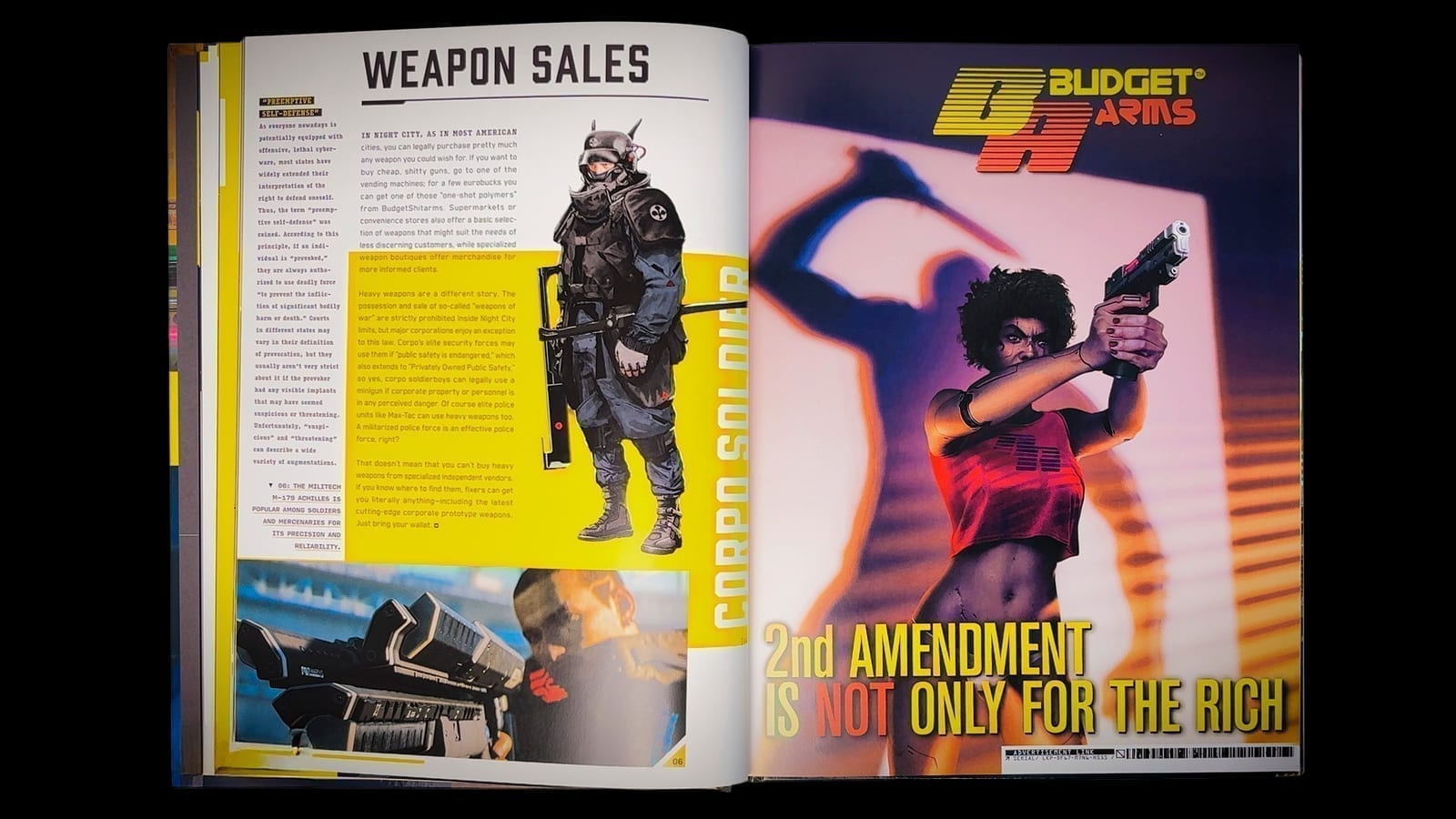
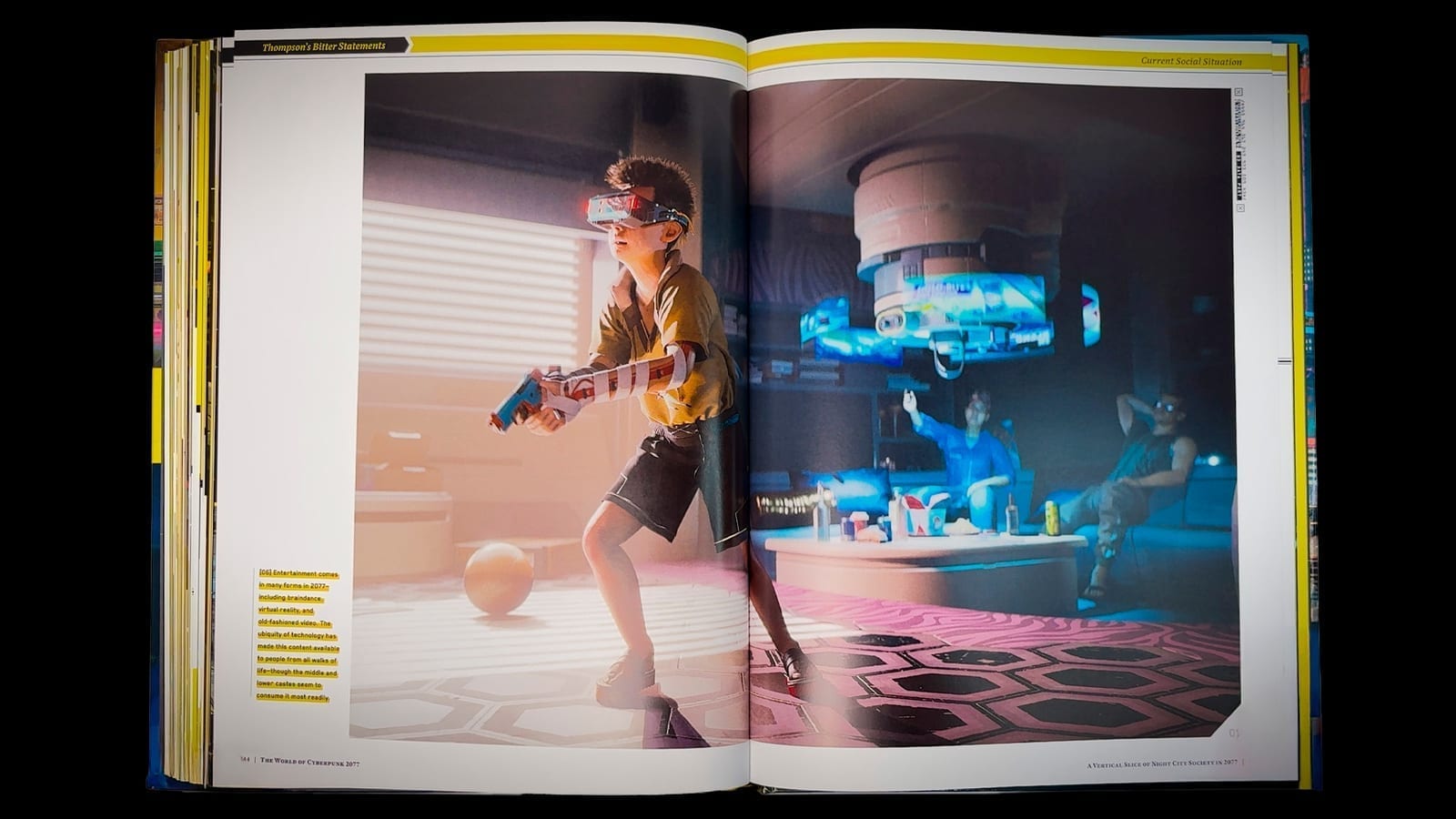
The technology chapter is where I spent the most time: cyberware, weapons, vehicles, braindance, netrunning, and a thoughtful section on cyberpsychosis — the question of how much of yourself you can replace before you stop being a person. That’s the beating heart of the whole franchise, and the book handles it well.
Then come the Night City chapters: the districts, the neighbourhoods you shouldn’t walk through after dark, the exclusive clubs, the black markets. Scattered all through are fake in-world adverts, and they’re the funniest thing in the book. My favourite is for Real Water®, 99 eddies per gallon — a joke that gets less funny the longer you think about it.
The district coverage is the one place the book feels thin. It’s the longest section, but a lot of the detail was clearly left for the game to show you, and one sharp-eyed reviewer pointed out that the maps don’t mark the shoreline — so it’s hard to tell which districts sit on the coast. A small thing, but a strange one for a city guide.
What’s inside
The book is split into six chapters:
- History — over eighty years of alternate future, from collapse to corporate war.
- Technology — cyberware, weapons, vehicles, braindance, netrunning and cyberpsychosis.
- Night City — four chapters on districts, social classes, law and order, gangs and nomads.
- Interview — Rogue, fixer and survivor, in her own words.
Plus in-world adverts, maps, concept art and in-game imagery on every page.
Real Water®, 99 eddies per gallon — a joke that gets less funny the longer you think about it.
The artwork
The art is gorgeous and polished, and there’s a lot of it — but it’s finished art: concept paintings, in-game stills, maps and those brilliant fake ads. If you’re hoping to see how a character was designed from the first sketch, this isn’t that book.
The writing is the real attraction, and it’s better than it needs to be. It’s dense in places, and the gang descriptions occasionally lean on clichés, but it’s full of satire and it holds together.
Readers seem to agree: the English hardcover sits at 4.27 on Goodreads across more than a thousand ratings, which is a big, settled sample.
Video Preview
New artbook videos every week
Subscribe for more animation and concept art content.
▶ Subscribe on YouTubeIs it worth it?
If you’ve played Cyberpunk 2077, watched Edgerunners, or you run Cyberpunk RED, absolutely — it’s the best single place to read the world’s history, and it’ll make your next walk through Night City richer.
If you’re after a traditional artbook full of process work, skip it. It’ll frustrate you.
Verdict: not an artbook, and better for being honest about it — a rich, funny, beautifully designed field guide to one of the most detailed worlds in games.
Value
It goes for around $33, and it’s been around since 2020, so it’s usually discounted and easy to find secondhand. The Deluxe Edition is pricier and mostly worth it for the slipcase and extras rather than any extra content.
If you decide to pick it up, the links at the end of this post are affiliate links. It costs you nothing extra and it helps keep this channel going.
📚 Want this book? Grab your copy:
As an Amazon Associate we earn from qualifying purchases. Other links above are also affiliate links — if you buy through them we may earn a small commission at no extra cost to you.
Play the game on PC, PlayStation 5, Xbox Series, Nintendo Switch 2 and macOS