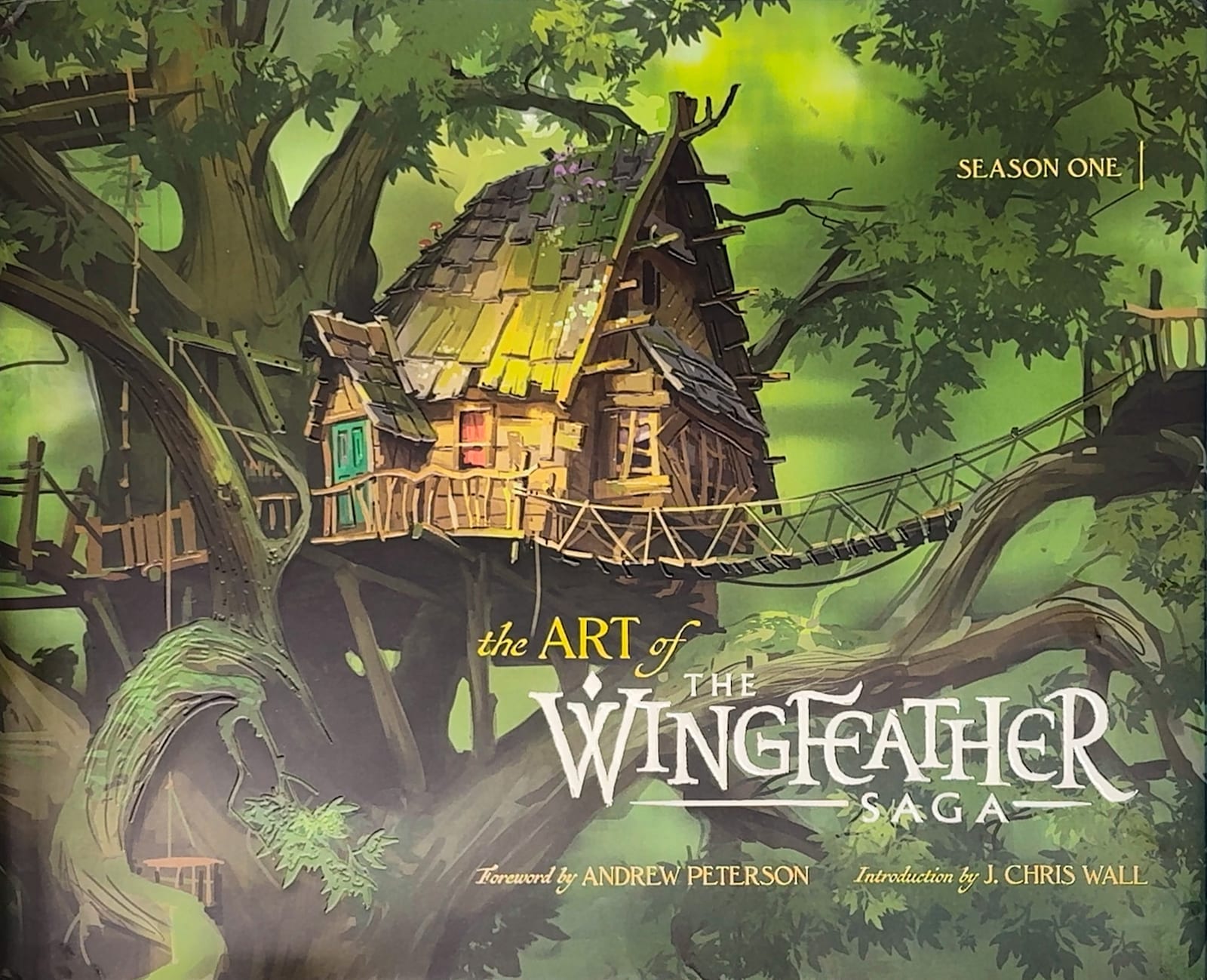
About the book
Most of the artbooks on this site come from studios with a thousand people and a nine-figure budget. This one doesn't, and that's the whole reason it's interesting.
The Wingfeather Saga is an animated adaptation of Andrew Peterson's four fantasy novels, made by a small independent outfit called Shining Isle Productions with Angel Studios — and paid for, almost entirely, by its own audience. The Art of The Wingfeather Saga — Season One is the book about how they pulled it off. Peterson wrote the foreword, showrunner J. Chris Wall wrote the introduction, and in between you get hundreds of concept sketches, character designs, storyboards, lighting studies, effects work and final frames, with commentary from the art director, the producers, the animators and the designers.
First impressions
It’s a properly made object, which surprised me a little: big landscape hardcover, dust jacket, ribbon bookmark sewn in. At 152 pages it’s slimmer than a Chronicle or Abrams volume, and it covers only six episodes of television rather than a feature film — so go in with the right expectations about scale.
What it does have is warmth. The commentary reads like people who are still slightly amazed the show exists, because they are. There’s none of the corporate polish you get from a studio book, and I mean that as a compliment.
Content
The Art of The Wingfeather Saga — Season One. 152 pages, hardcover, published by Angel Studios with Shining Isle Productions. Released October 11, 2023, between the first and second seasons.
A note on buying it, because it matters here: the original price was $39.99, but it’s been heavily discounted since — I’ve seen it listed as low as $12 — and the official Angel shop has it marked as sold out. This is not a book with a reliable supply chain. If you want it, grab it when you see it.
Characters
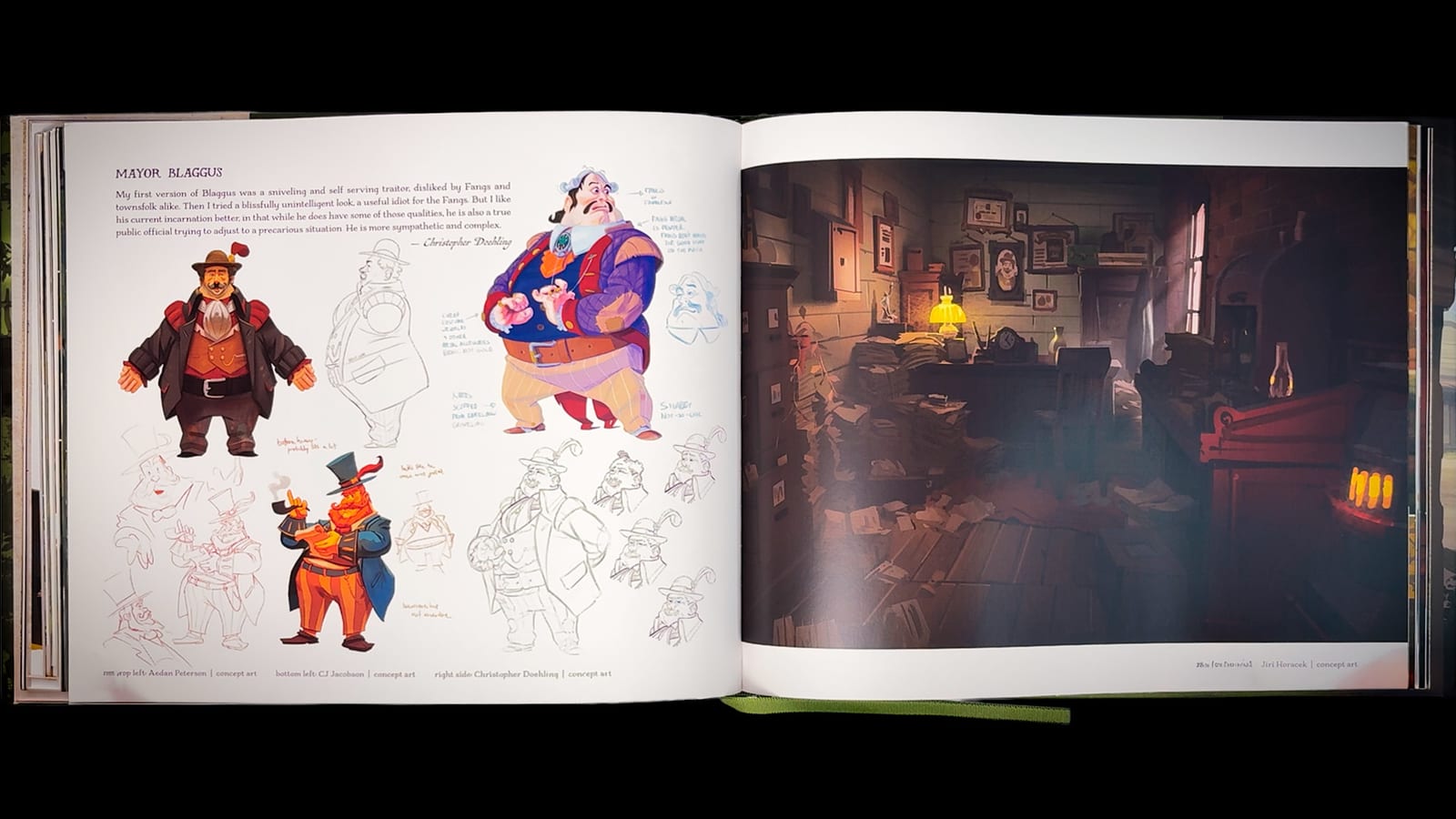
The Igiby family is the heart of the thing: Janner, Kalmar — everyone calls him Tink — and their little sister Leeli, plus their mother Nia and their one-legged pirate grandfather Podo. The design section tracks all of them from rough sketch through to final model, and it’s a good reminder of how much heavier the lifting is when you’re adapting characters that readers already have strong pictures of in their heads.
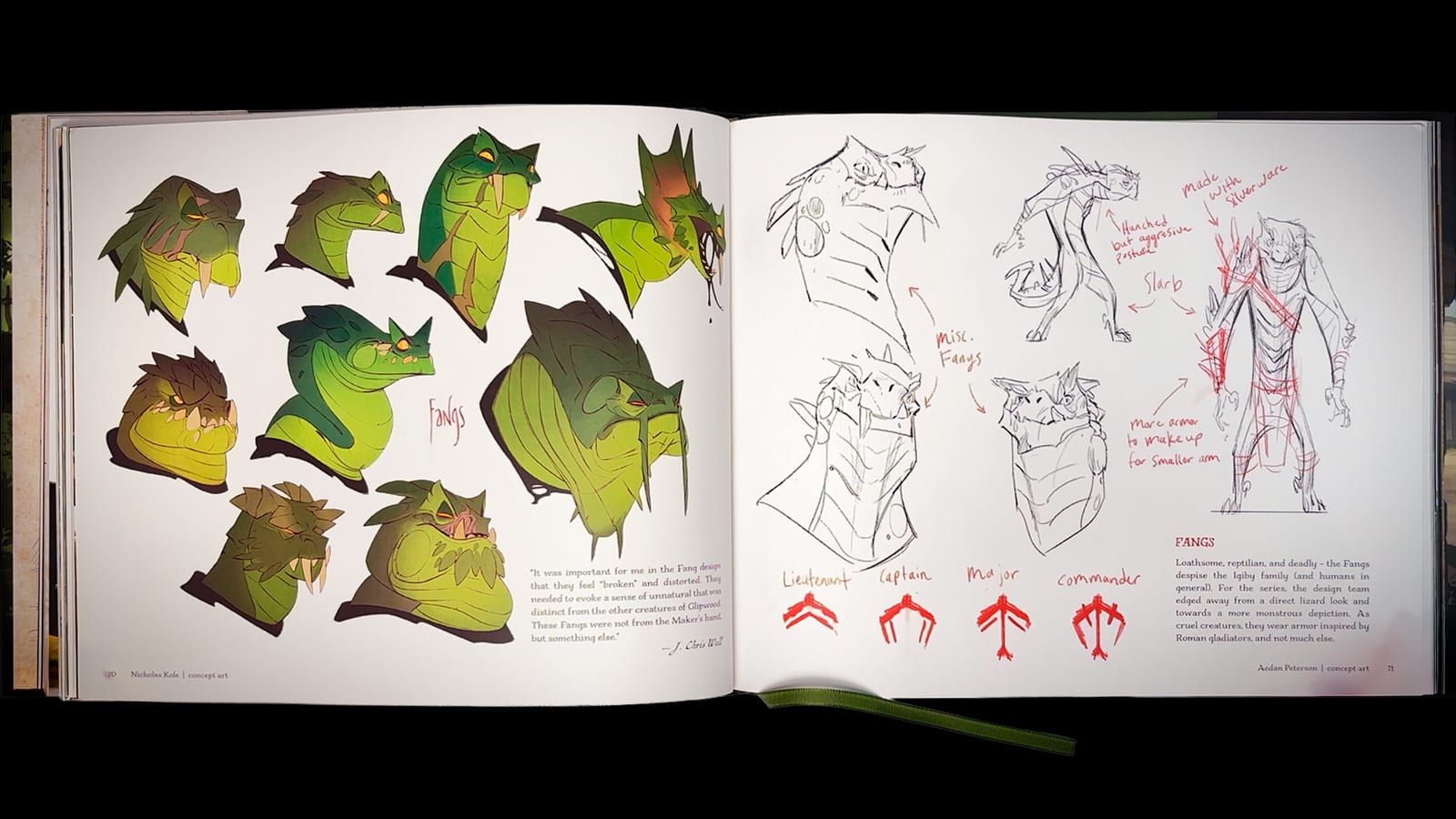
The Fangs of Dang get their own pages, and they’re the most fun material in the book — lizard-men soldiers that had to be genuinely frightening for kids without tipping into horror. Oskar N. Reteep, Artham, and Gnag the Nameless are all in here too.
The journey through the story
The origin story is the best part of the book, and it’s worth knowing even if you never buy it.
Wall and Peterson ran a Kickstarter in March 2016 to make a pilot. That pilot — a fifteen-minute short called A Crow for the Carriage — premiered at the Belcourt Theatre in Nashville in November 2017. It was essentially a proof of concept: here is what this could look like, please believe us.
People believed them. A second campaign through Angel Studios in May 2021 raised $5 million to fund Season 1, and by the time this book came out the project had taken in over $8.2 million from more than 10,000 individual investors, making it the most crowdfunded animated family series ever made. The plan is seven seasons, one per novel arc — Season 1 ran December 2022 to March 2023, and they’ve been steadily working through it since.
The book opens with that history, and the short film material is the part I’d point a first-time reader toward.
The worlds
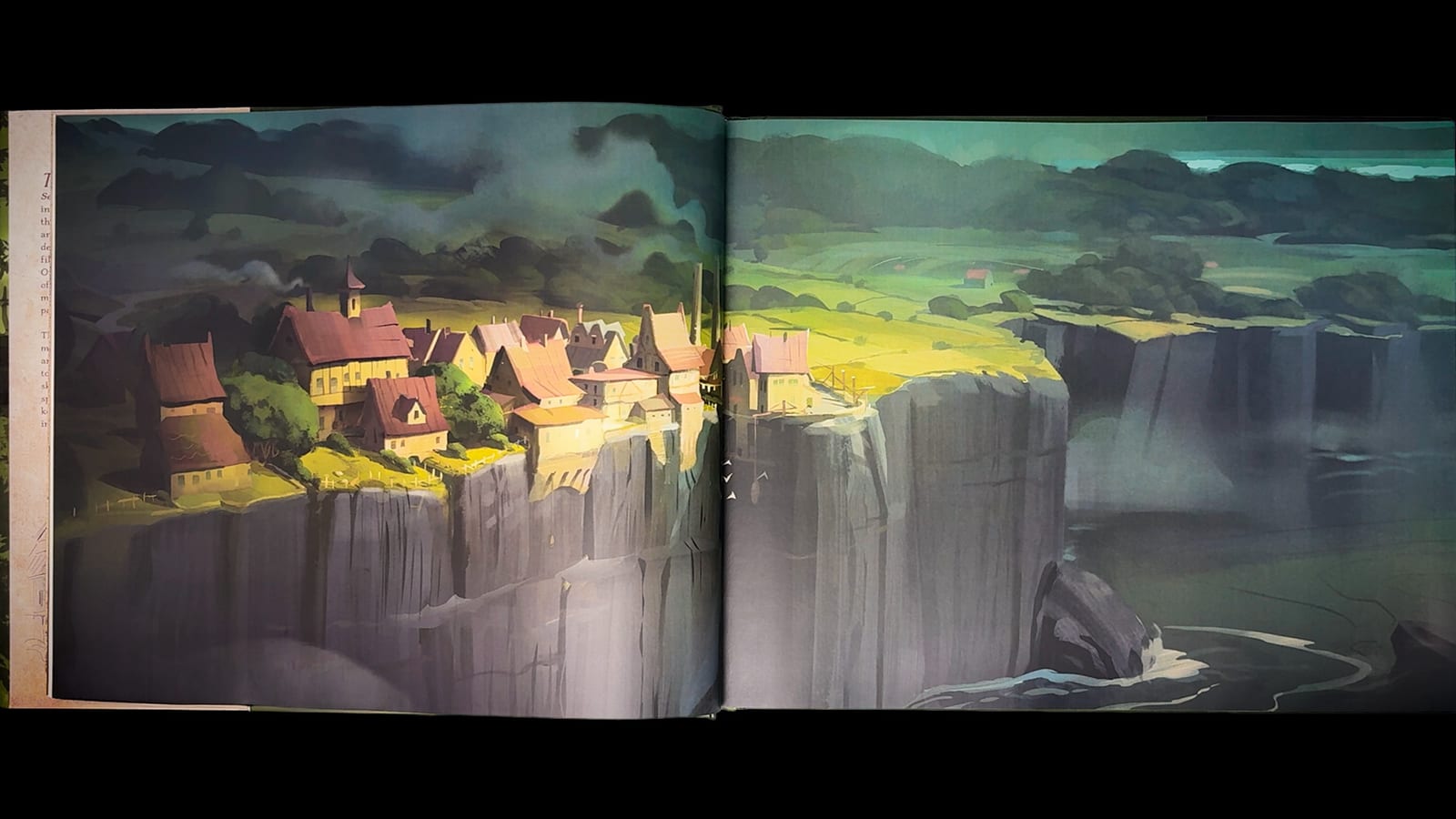
Aerwiar — the world of the books — is rendered in what the team calls a “paint-motion” look, and this is where the book earns its place on a shelf next to the big studio volumes.
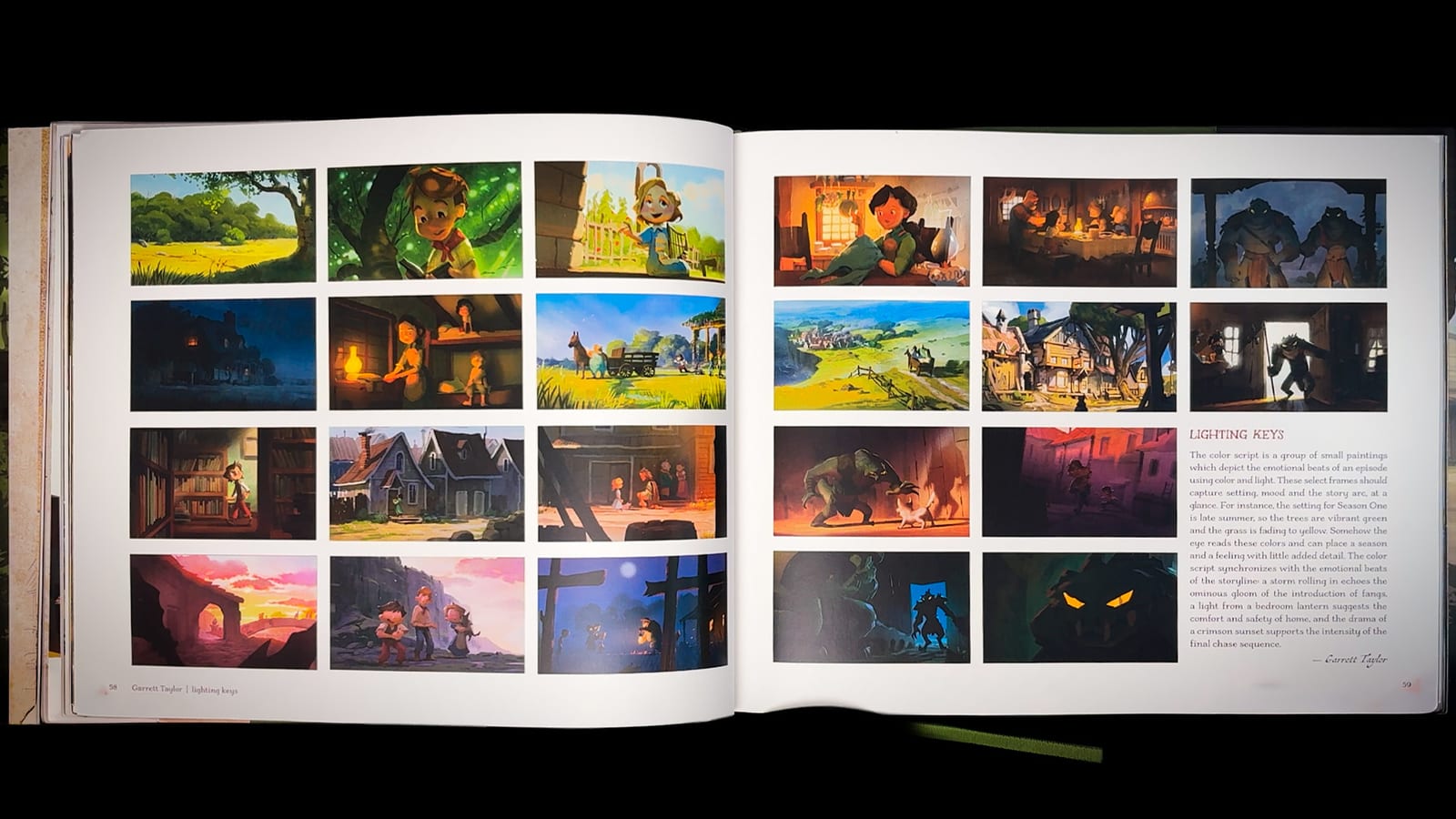
The show is made in Unreal Engine, with custom shaders written to produce a storybook painting directly in the render rather than by compositing filters over a realistic image. The team broke the style down into specific ingredients they could control: brush strokes, edge breakup, texture distortion, pixel blending and stylised light falloff. Traditional CG characters move through handcrafted 2D environments, and the seams mostly vanish.
And here’s the detail that genuinely impressed me: the early seasons were animated on consumer-grade laptops. Not a render farm. Laptops. The book’s lighting studies and effects pages are basically the record of a small team figuring out how to get a painterly image out of hardware that had no business producing one.
Wall has described the real-time workflow as “the cheat code on speed of iteration” — and VP of animation Keith Lango has said their animation revision rate went from 4% in Maya to nearly 10% in Unreal at no extra cost. More revisions means more chances to make a shot better. That’s the actual competitive advantage of a small studio here, and the book shows the results.
What’s inside
The book runs from the short film through the end of Season 1:
- Origins — the Kickstarter, the pilot, and the look that convinced people to fund it.
- Character design — the Igibys, the Fangs of Dang, and the supporting cast.
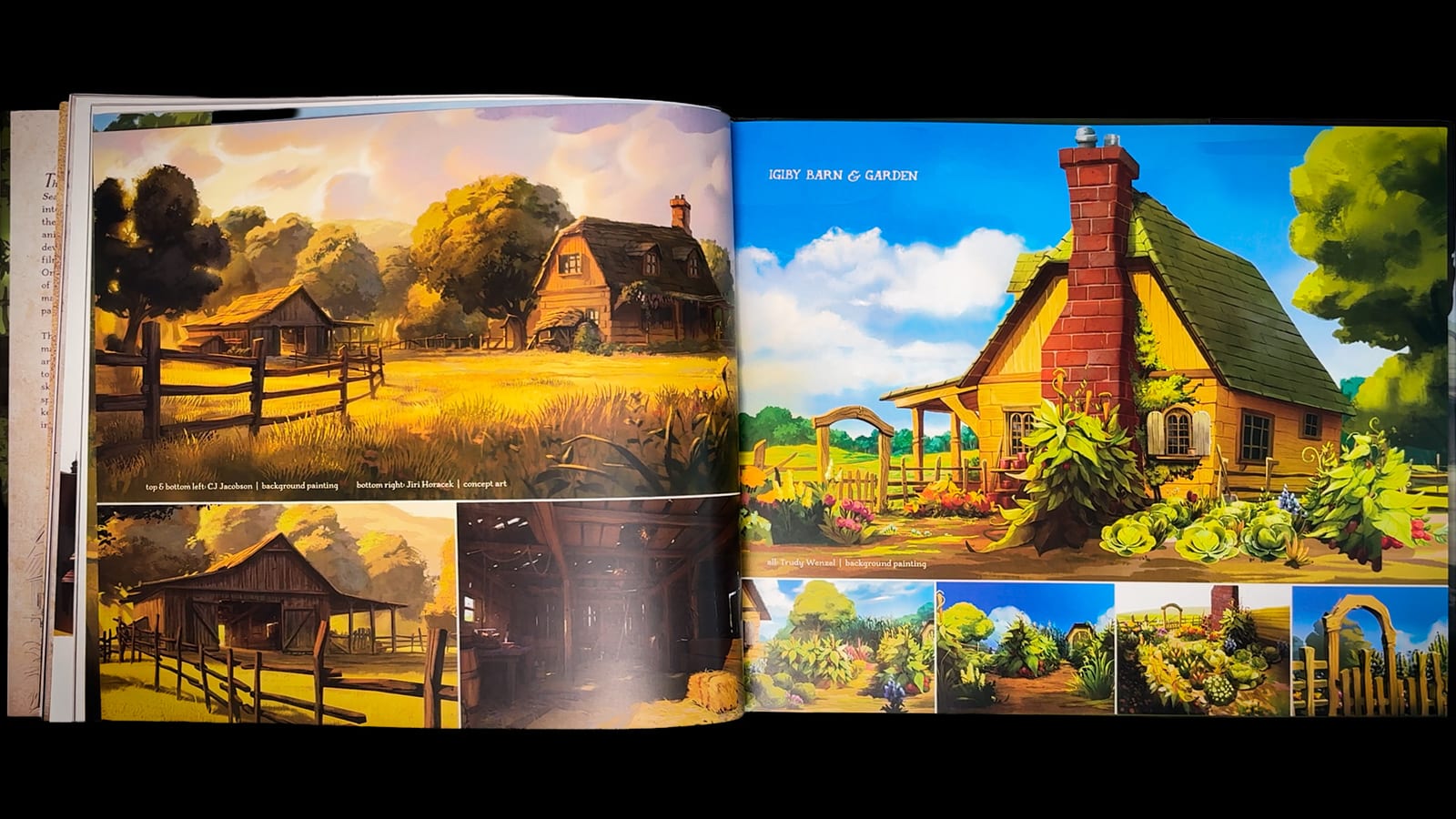
- Environments — Glipwood, the Igiby cottage, the Black Carriage, the forest.
- Lighting & effects studies — the technical heart of the painterly look.
- Storyboards & final art — sequences from first pass to finished frame.
“The cheat code on speed of iteration.” — showrunner J. Chris Wall, on animating in real time.
The artwork
The reproduction is good and the art is lovely, particularly the environment work — Glipwood and the surrounding forest carry a lot of the show’s storybook feeling and they hold up printed large.
Two honest caveats. First, the Goodreads rating is a glowing 4.88 — but that’s across only about 16 ratings, so it’s a small, very devoted sample rather than a broad verdict. Treat it as “fans love it” rather than “critically established.” Second, one reviewer made a point I agree with: the book sometimes moves through the art too quickly, cramming several pieces onto a spread where one or two would have breathed better. It’s a 152-page book carrying a lot of material.
Video Preview
New artbook videos every week
Subscribe for more animation and concept art content.
▶ Subscribe on YouTubeIs it worth it?
If you watch the show, or if you’re interested in how a small team produces a stylised look on a tiny budget, absolutely — and at the prices it’s been going for, it’s one of the best-value artbooks I’ve covered.
If you’re looking for the depth and scale of a Pixar or DreamWorks volume, this isn’t that, and it isn’t trying to be. It’s a season-one book from an independent studio, and the appeal is partly that you can feel the seams.
Verdict: a warm, genuinely useful little book about one of the most interesting stylistic experiments in television animation right now. Buy it when you find it, because finding it is the hard part.
Value
Originally $39.99, but it’s been discounted aggressively and turns up secondhand for far less. The catch is availability — the official store has run out, so you’re at the mercy of third-party sellers and whatever the going rate is that week. For what you get, even at full price it was fair; at clearance prices it’s a steal.
If you decide to pick it up, the links at the end of this post are affiliate links. It costs you nothing extra and it helps keep this channel going.
📚 Want this book? Grab your copy:
As an Amazon Associate we earn from qualifying purchases. Other links above are also affiliate links — if you buy through them we may earn a small commission at no extra cost to you.
Stream the series on the Angel Studios app
Also available on Prime Video. Availability varies by region, so check your local platform.