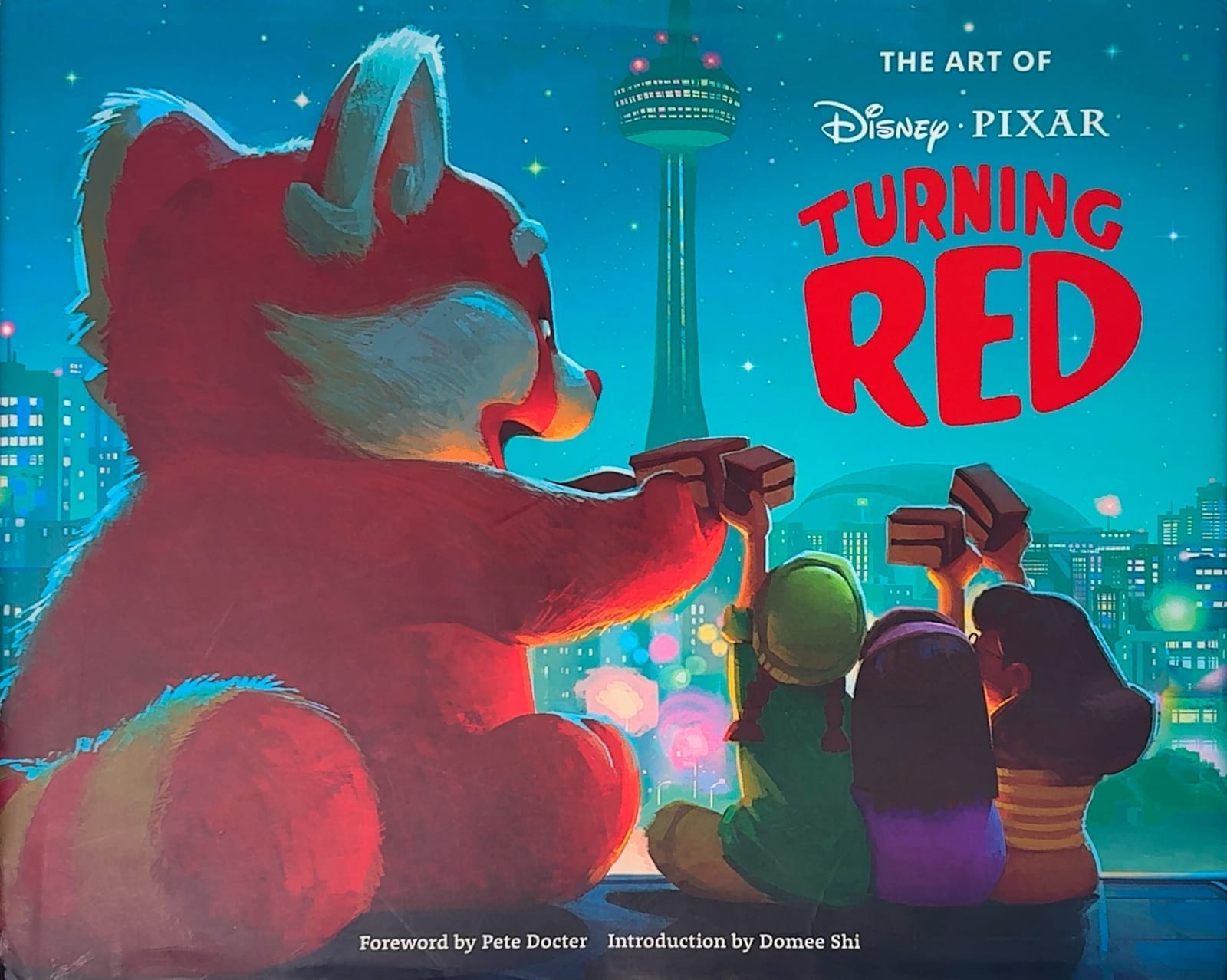
About the book
Mei Lee is thirteen, lives in Toronto in 2002, and turns into a giant red panda every time she feels something too strongly. Domee Shi called the film "an Asian tween fever dream," which is still the best three-word review anyone has written of it — and The Art of Turning Red is the book about how that dream got designed.
It opens with a foreword from Pete Docter and an introduction from Shi herself, and closes with a note from producer Lindsey Collins. In between: character designs, storyboards, colour scripts, and — a detail I loved — a replica of Mei's own sketchbook from the movie.
First impressions
Standard Chronicle “Art of” format, and it suits this film enormously. Turning Red is one of the most colour-saturated things Pixar has made, and the printing here keeps the pinks and reds from going muddy, which is harder than it sounds.
One practical warning before you buy: read it after you’ve seen the film. The book follows the story in order and doesn’t hide the twists. Multiple reviewers have flagged this and they’re right.
Content
Disney/Pixar The Art of Turning Red. 160 pages, hardcover, Chronicle Books. Released February 22, 2022, a couple of weeks before the film hit Disney+.
Characters
Mei’s design section is where the book is strongest, and there’s a specific idea underneath it that makes everything click.
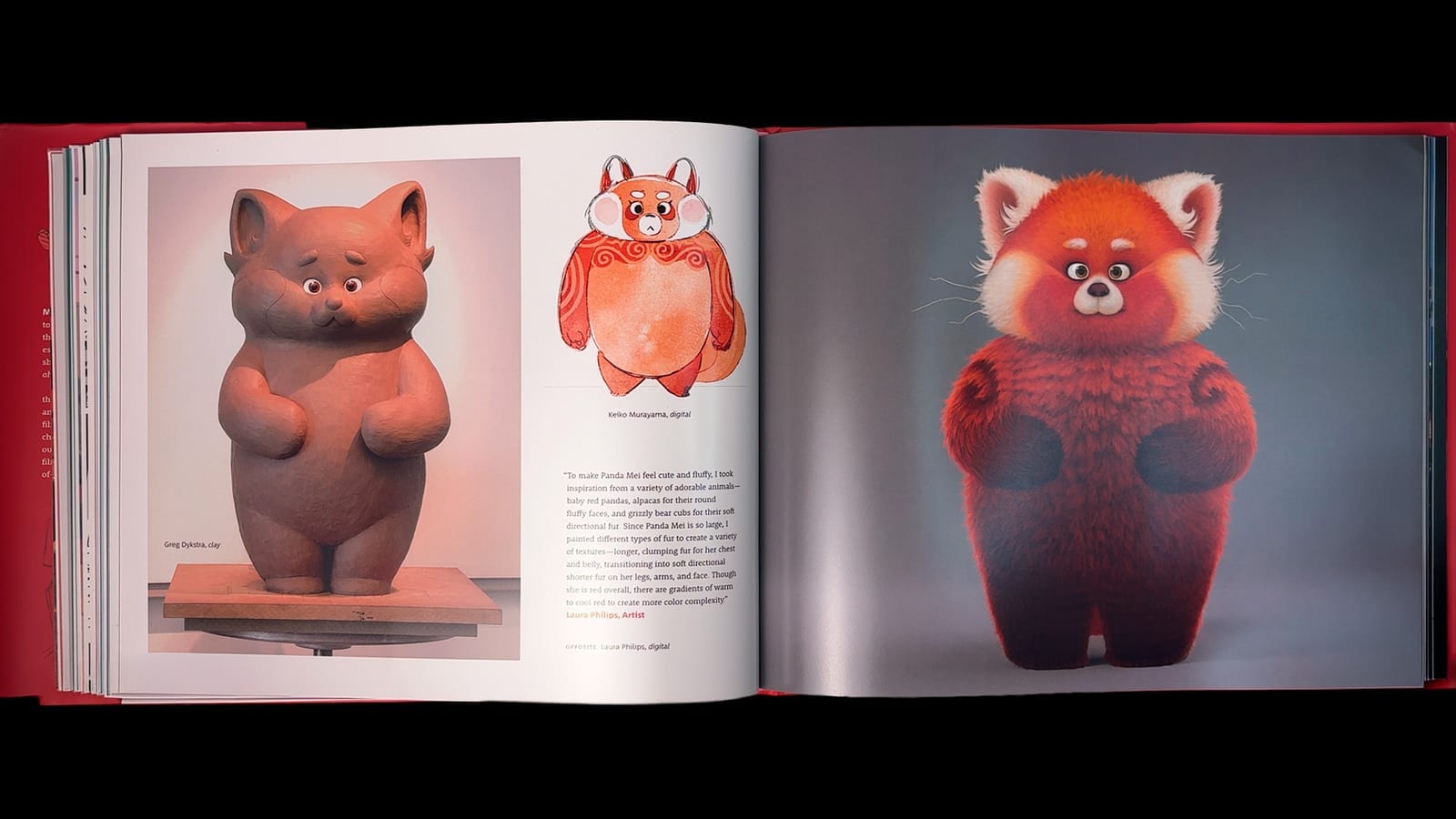
Production designer Rona Liu built the film’s look around what she calls “chunky cute” — her definition is “embracing curvatures, round angles, having no sharp angles.” Everything is thick, soft and rounded, with the detail simplified out. And the origin of that is genuinely charming: she got the idea from ancient clay sculptures she saw at an Asian art museum. The guiding principle wasn’t realism, it was believability — things should feel true, not look photographic.
Panda Mei is the payoff. The book shows how she was assembled from more than one animal: baby red pandas, obviously, but also alpacas, which is why she has that slightly goofy, top-heavy sweetness instead of looking like a nature documentary.
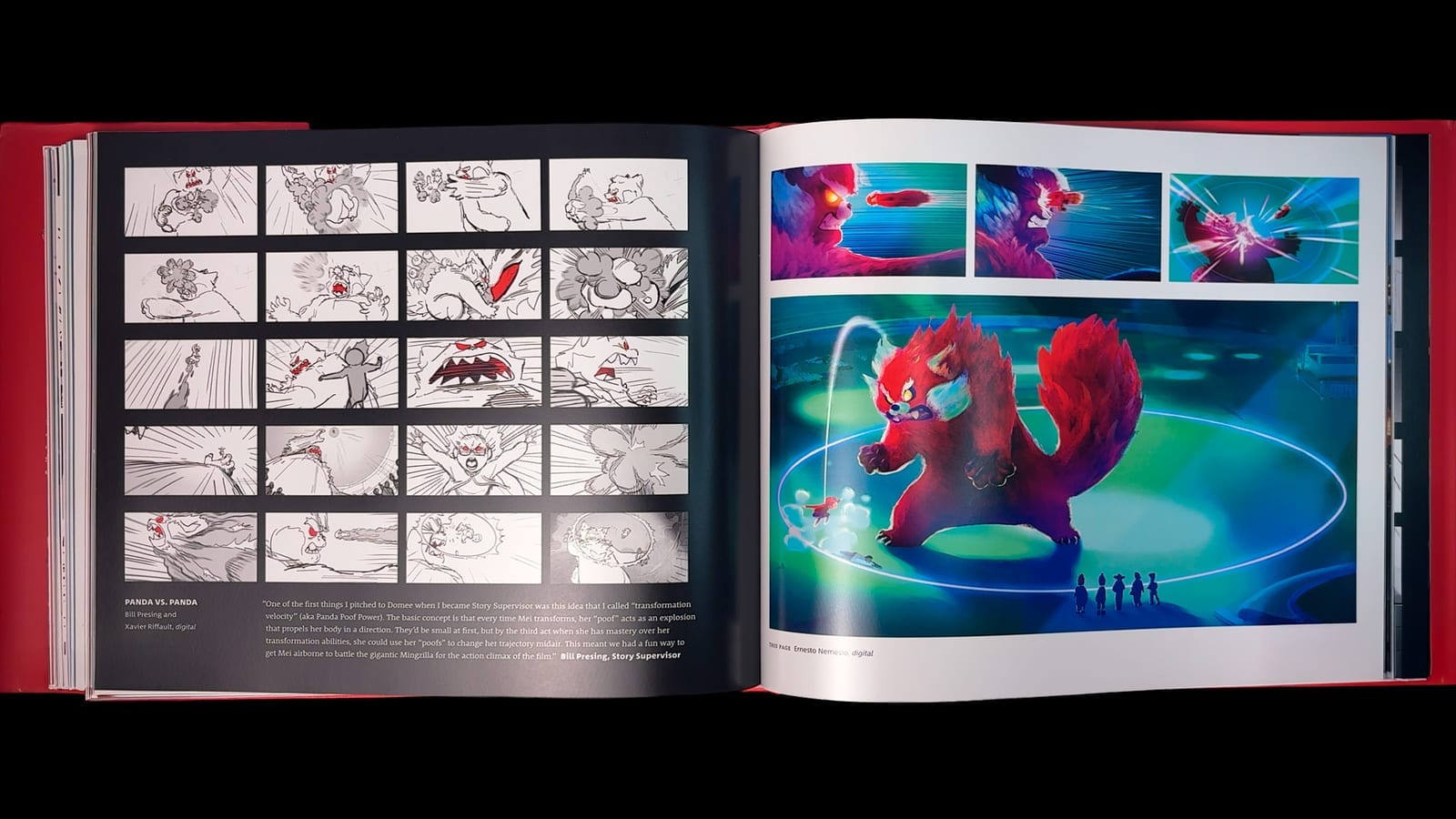
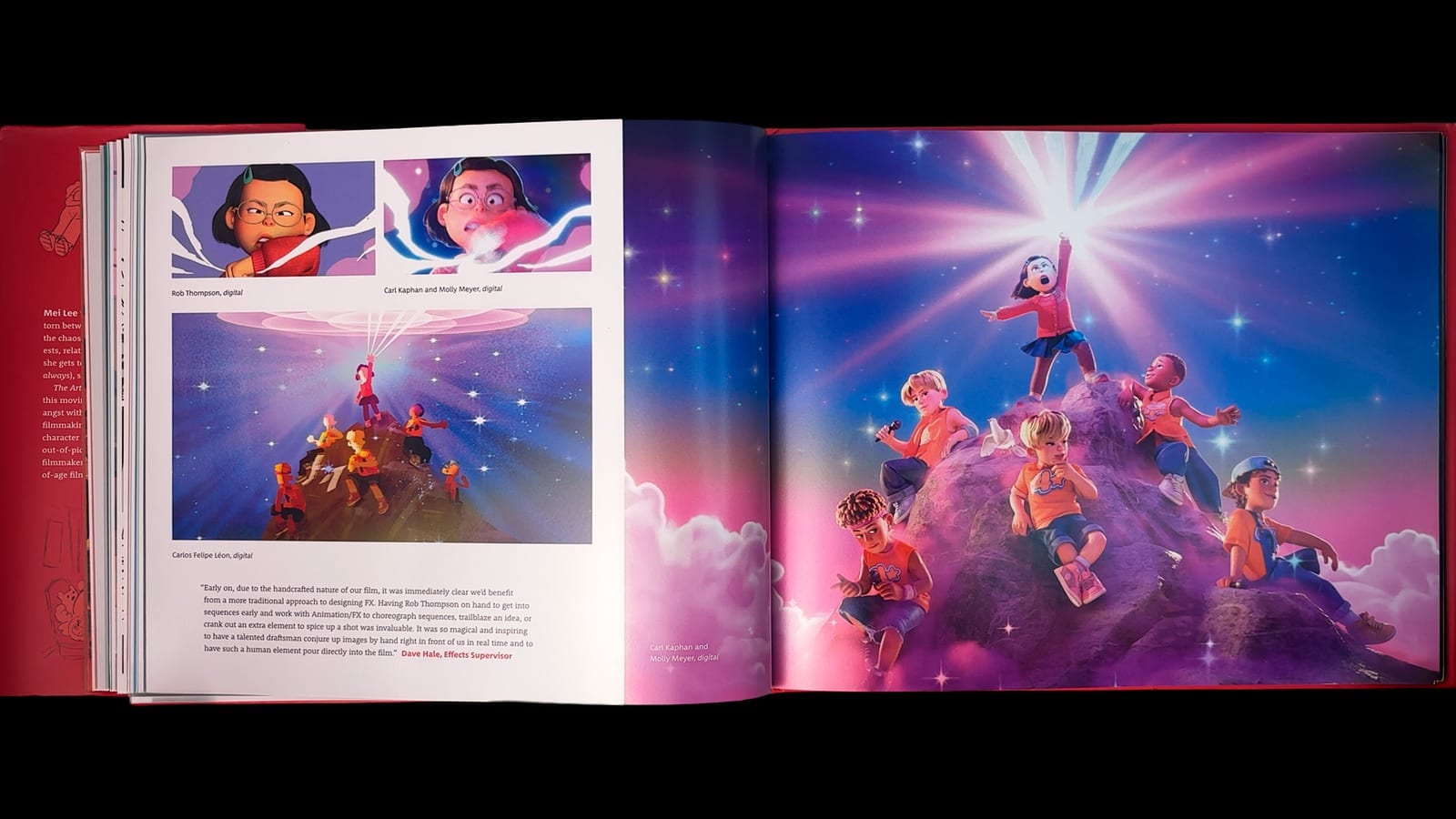
Then there’s the anime layer, which the book is refreshingly open about. Liu grew up on Evangelion and Dragon Ball Z; she and Shi built the film out of their shared thirteen-year-old selves. Sailor Moon, Ranma ½, Fruits Basket, Sanrio, Pokémon, Zelda — the influences are all in here, along with the hand-drawn 2D effects that get layered on top of the 3D animation whenever Mei’s emotions spike. There are Easter eggs too, if you look: Sailor Moon and Pikachu are in there.
The journey through the story
Something unusual happened with this film, and the book quietly documents it: it didn’t get rebuilt. Most Pixar features go through at least one brutal restructuring. Shi pitched three coming-of-age ideas in October 2017, this one won, development started in May 2018, and the story she pitched is more or less the story that got made — refined, not rewritten. Four years, start to finish, one of the fastest turnarounds the studio has had.
Shi was the first woman to solo-direct a Pixar feature, after making the short Bao, and the creative leadership team around her ended up being all women — Rona Liu included — which the book notes happened organically rather than by design.
And then there’s the other thing that makes this film’s production unusual. Most of it was made during lockdown: over 300 artists working from their houses instead of the Emeryville campus. Pixar even shipped professional recording gear to Rosalie Chiang, Mei’s voice, so she could record from home. Lindsey Collins’ closing note is about exactly that, and it recontextualises the whole book.
The worlds
Toronto in 2002 is recreated with an accuracy that’s almost aggressive, and the method was very low-tech: the team pulled out their own yearbook photos and worked from those, then cross-checked against Google and Getty. That’s why the clothes, the accessories and the technology all land — pagers and flip phones, no smartphones anywhere.
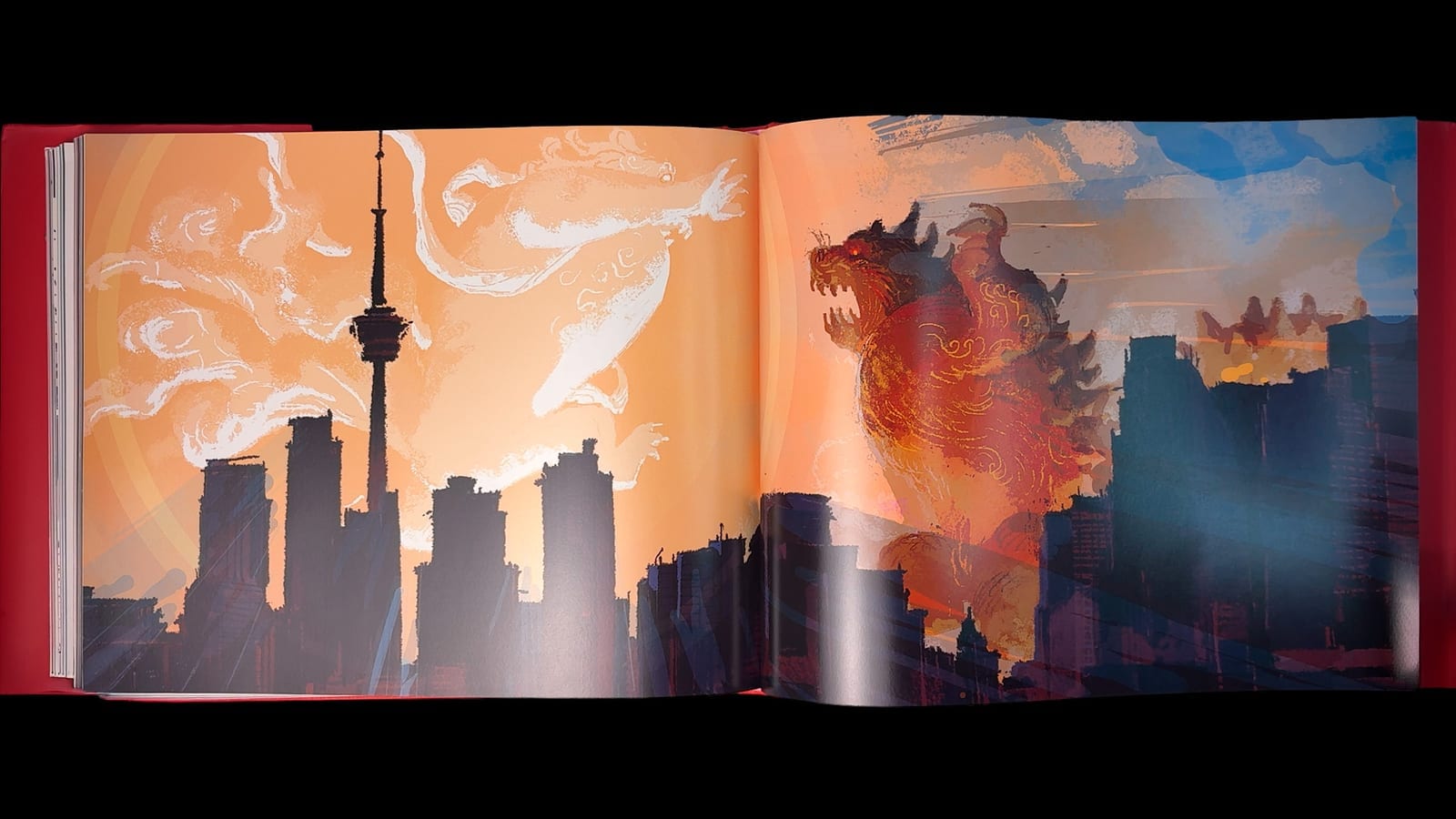
The colour work gets proper attention too. The palette starts in soft pastels while Mei is still confident and in control of her life, then climbs into high-contrast saturation as things fall apart. The colour scripts in here let you watch that happen across the whole film at a glance.
There’s also a genuinely interesting production problem the book covers: how do you fit an enormous red panda inside a small family home? Environments and characters had to be designed against each other. Liu’s line about it stuck with me — “we couldn’t have made the house without the characters and we couldn’t have made the characters without the environment.”
What’s inside
The book follows the film roughly in story order:
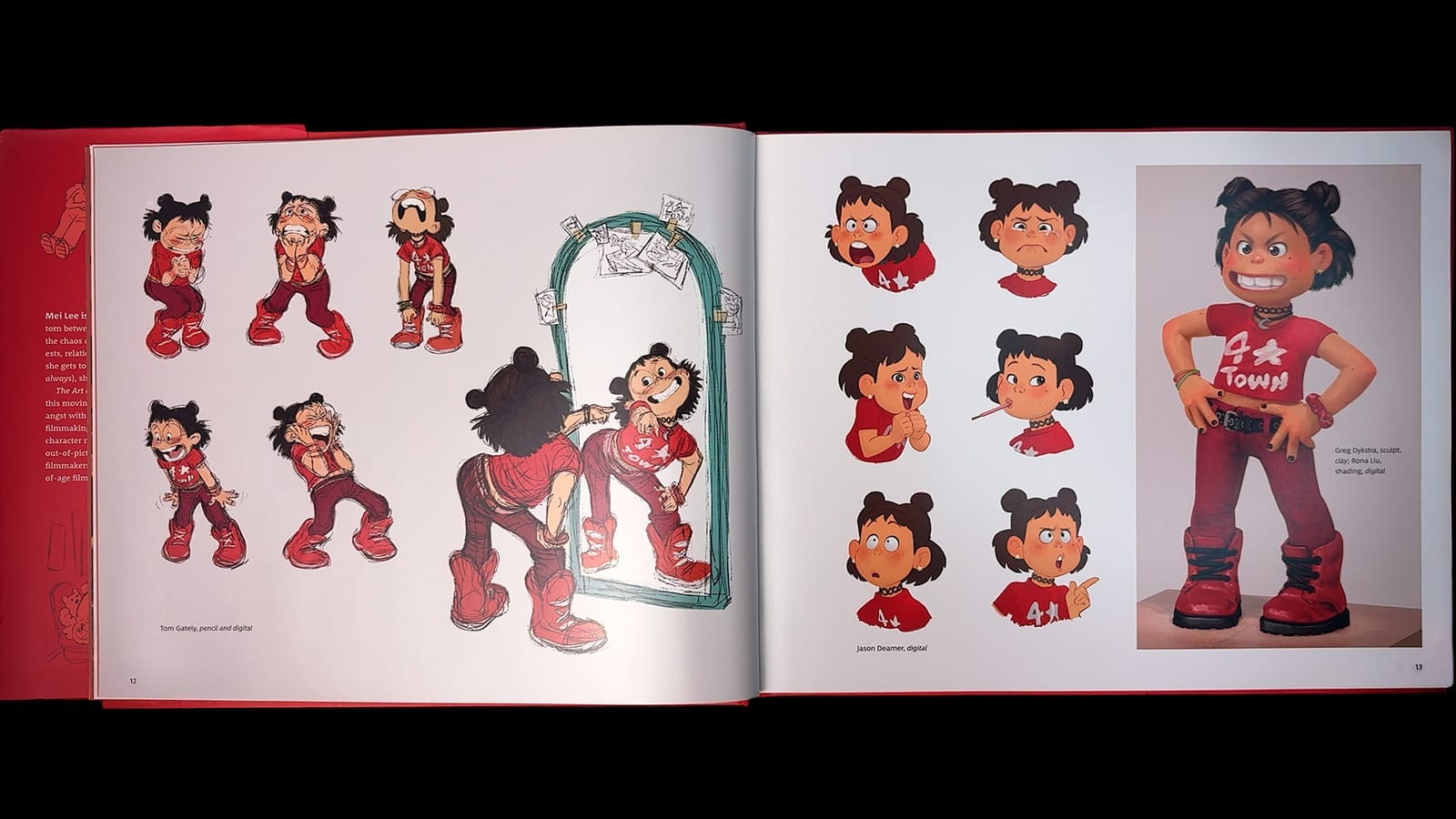
- Character design — Mei in both forms, her mother Ming, the friend group, 4*Town.
- Environments — the temple, the house, the school, Toronto in 2002.
- Storyboards & unused gags — including jokes that never made it in.
- Colour scripts — the emotional map of the film from pastel to full saturation.
Plus Mei’s replica sketchbook, which is the kind of extra that makes a book feel like an object rather than a catalogue.
“Chunky cute” — embracing curvatures, round angles, having no sharp angles.
The artwork
It sits at 4.62 on Goodreads across around 190 ratings, and readers love the art without reservation.
The consistent complaint — and I have to pass it on because it comes up again and again — is the text. One reviewer put it bluntly: there are “no text explanations at all, only short quotes.” You get the artwork and you get scattered lines of commentary, but not the paragraphs explaining why a decision was made that the older Pixar art books used to carry.
It’s frustrating precisely because the ideas in this film are so good. The chunky-cute philosophy, the clay-sculpture origin, the alpaca in the panda — those are things I had to go find in interviews. They deserved to be in the book.
Video Preview
New artbook videos every week
Subscribe for more animation and concept art content.
▶ Subscribe on YouTubeIs it worth it?
If you love the film, yes. The character work alone is worth it, and the colour scripts are a proper teaching tool if you’re studying how colour carries emotion across a story.
If you’re building a reference library and you want deep written process, this one is more gallery than lecture. Beautiful gallery, though.
Verdict: one of the most visually distinctive Pixar films of the last decade, and a book that captures the look beautifully while under-explaining the thinking behind it.
Value
It goes for around $28 / CA$35 / £22 / €30 — good value for a 160-page Pixar hardcover. It’s been out since 2022, so it’s regularly discounted and easy to find secondhand in good shape. Worth comparing prices before you commit.
If you decide to pick it up, the links at the end of this post are affiliate links. It costs you nothing extra and it helps keep this channel going.
📚 Want this book? Grab your copy:
As an Amazon Associate we earn from qualifying purchases. Other links above are also affiliate links — if you buy through them we may earn a small commission at no extra cost to you.
Stream the film on Disney+